Pest control services Fargo homeowners rely upon deploy tactical perimeter barriers and mechanical exclusion to stop seasonal infestations before structural integrity or indoor air quality degrades. When uninsulated basement rim joists or crawl spaces succumb to winter thermal draw, localized pest control services near me eliminate active mice, subterranean insects, and overwintering colonies at their primary ingress points.

Pest control services in Fargo encompass professional structural inspection, biological threat eradication, exterior barrier deployment, and mechanical rodent exclusion designed to neutralize invasive organism populations within residential and commercial buildings across Cass County.
Every service reflects the same meticulous attention to detail, whether it's a single job or a larger pest control services project across Fargo.
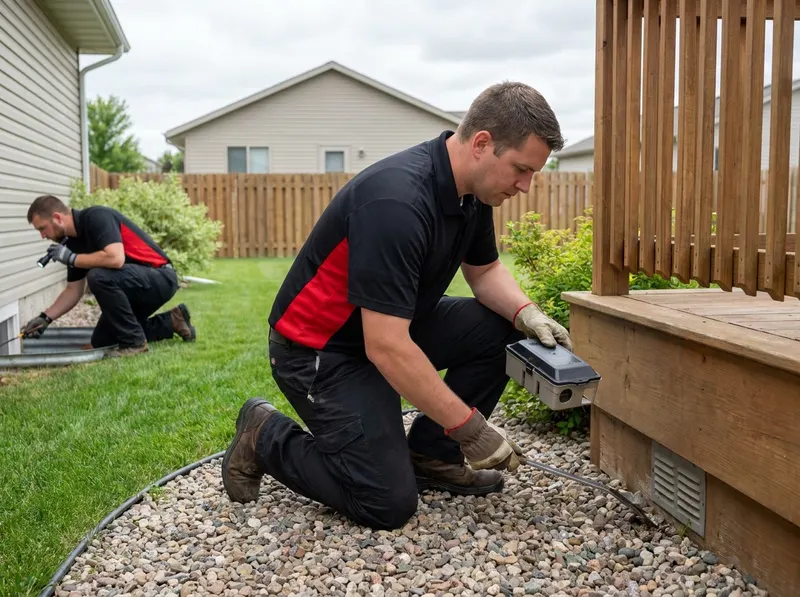
Rodent control terminates house mice (Mus musculus) and Norway rats (Rattus norvegicus) utilizing multi-catch mechanical traps, digital path monitoring, and elastomeric silicone caulking bonded with copper mesh across foundation slab penetrations. Technicians inspect subfloor rim joists, cold-air return ducts, drop-ceiling cavities, and uninsulated crawl spaces, removing biological contamination, localized nesting refuse, and applying mechanical harbor-denial barriers. Every exterior vulnerability down to one-quarter inch receives reinforcement with welded wire mesh, steel escutcheon plates around pipe entries, and reinforced commercial-grade neoprene door sweeps to prevent sub-zero winter entry across residential basements and slab foundations.
Get a quote →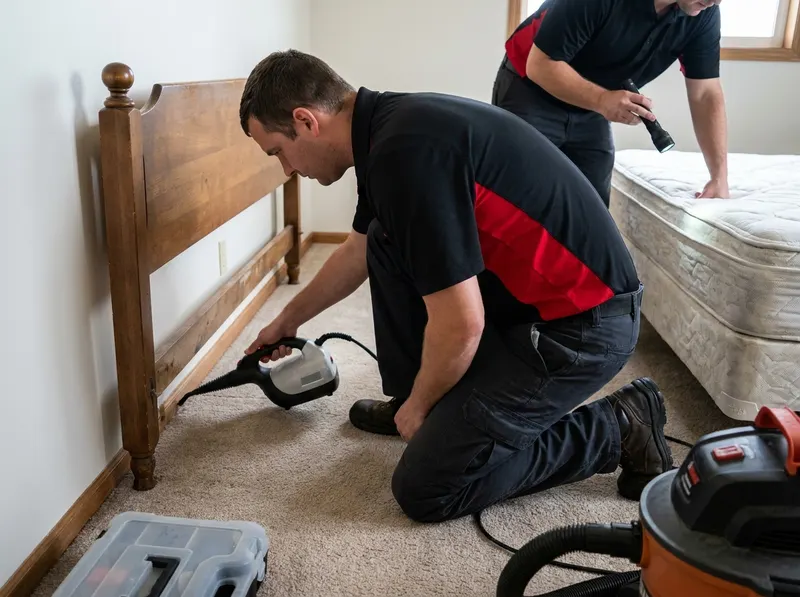
Bed bug extermination targets Cimex lectularius colonies through high-output electric thermal remediation, elevating closed-envelope indoor temperatures to 122°F to 135°F for sustained intervals across structural living spaces. This thermal process denatures insect proteins, desaturates lethal lipid layers across all developmental life stages, and penetrates deep into mattresses, box springs, baseboard cavities, electrical switch plates, upholstered headboards, and drywall cracks in a single treatment cycle. Treatment verification relies on industrial convective heat monitors and infrared thermography sensors mapped across interior corners to eliminate cold thermal spots and prevent chemical-resistant egg re-emergence.
Get a quote →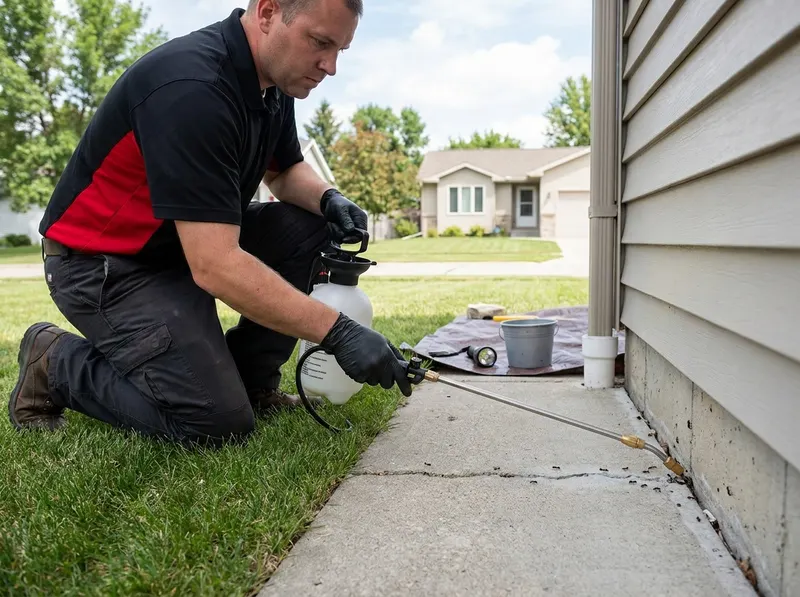
Ant control targets carpenter ants (Camponotus pennsylvanicus), pavement ants, and odorous house ants invading moist wall voids, window frame sill plates, and kitchen plumbing chases. Protocols implement non-repellent transfer chemistry and targeted structural bait formulations that foraging workers carry back into hidden satellite nests, systematically neutralizing subterranean and structural parent colonies without triggering structural colony budding. Field technicians systematically trace exterior ant trails along foundation walls, brick veneer ledges, tree limb overhangs, and moist ground covers, establishing liquid perimeter barriers that halt subterranean foraging trails before insects penetrate residential thermal envelopes.
Get a quote →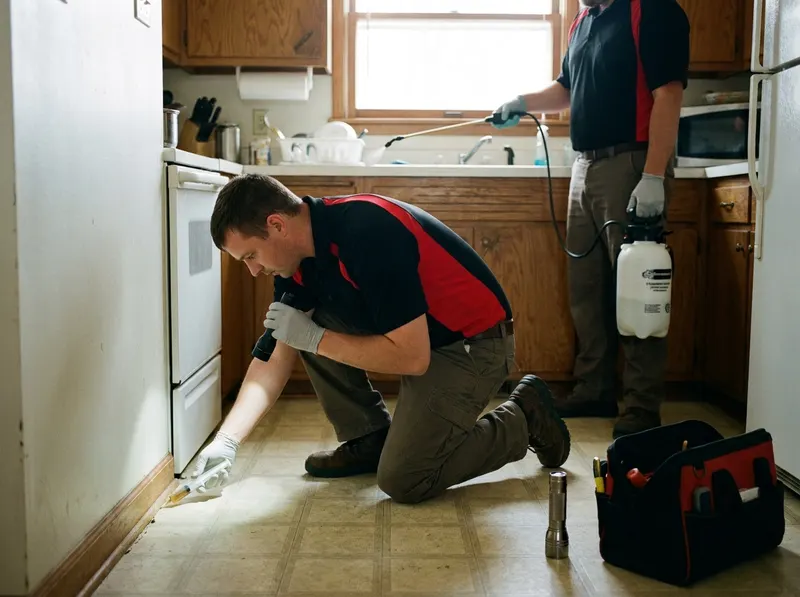
Cockroach extermination stops German cockroach (Blattella germanica) and American cockroach populations in high-moisture kitchen plenums, bathroom plumbing chases, dishwasher voids, and multi-unit utility chases. Technicians deploy targeted insect growth regulators, precision microencapsulated baits, and insecticidal gels behind cabinet hinge plates, electrical junction covers, and motor housings, combining chemical disruption with HEPA-filtered vacuum extraction to reduce allergen loads and reproductive momentum instantly. Follow-up biological monitoring tracks nymph hatch rates using sticky insect monitoring stations deployed beneath sink drains and appliances to ensure reproductive elimination across dense multi-family and commercial properties.
Get a quote →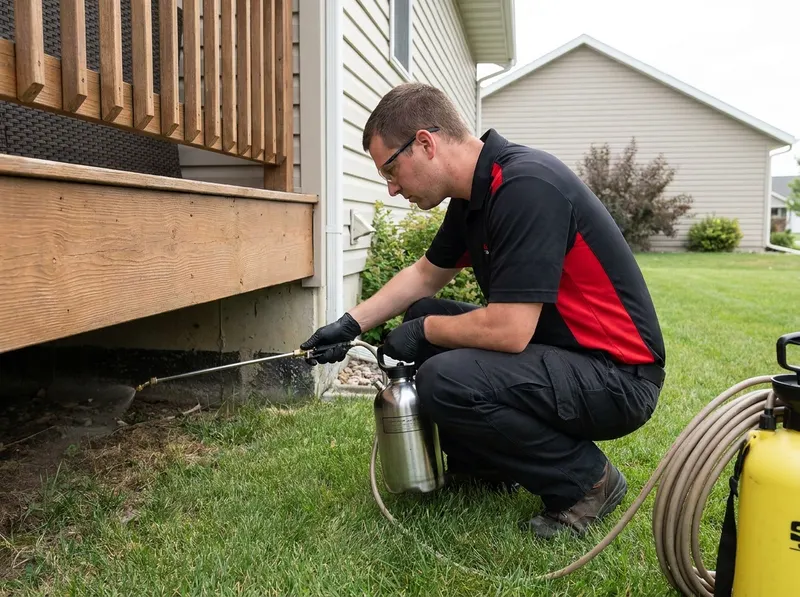
Spider control clears yellow sac spiders, wolf spiders, and cobweb weavers from unfinished basements, window wells, exterior eaves, soffits, and foundational masonry lines. The service clears web structures with telescoping brushes, introduces residual microencapsulated contact dusts into crawl space corners and perimeter floor joists, and establishes a 3-foot vertical exterior wall shield paired with a 5-foot horizontal foundation ground band. Specialized dust formulations injected into crawl spaces, perimeter expansion joints, and weep holes neutralize crawling arachnids and eradicate secondary prey populations, preventing seasonal indoor harborages during early autumn weather shifts.
Get a quote →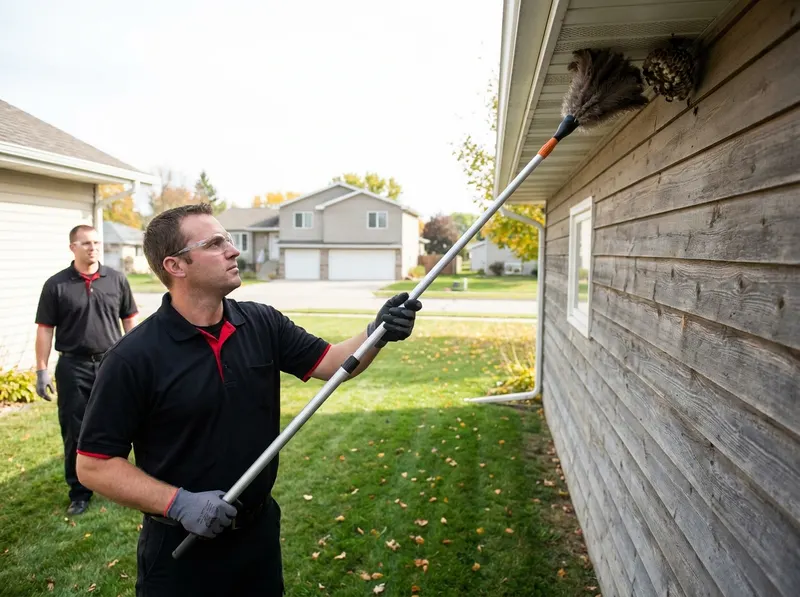
Wasp and hornet control neutralizes aerial yellowjackets, bald-faced hornets, and paper wasps nesting underneath roof eaves, deck framing, porch overhangs, siding offsets, and attic soffits. Specialized high-pressure aerosol injection knocks down active nests instantly while applying repellent pyrethroid barriers to deter reconstruction within the same structural microclimate. Technicians perform full structural removals of exterior paper comb structures and mud tubes, treating hidden entry points inside exterior fascia boards, soffit vents, and attic louvers to stop aggressive stinging populations from penetrating inhabited second-story bedrooms and exterior entertaining patios.
Get a quote →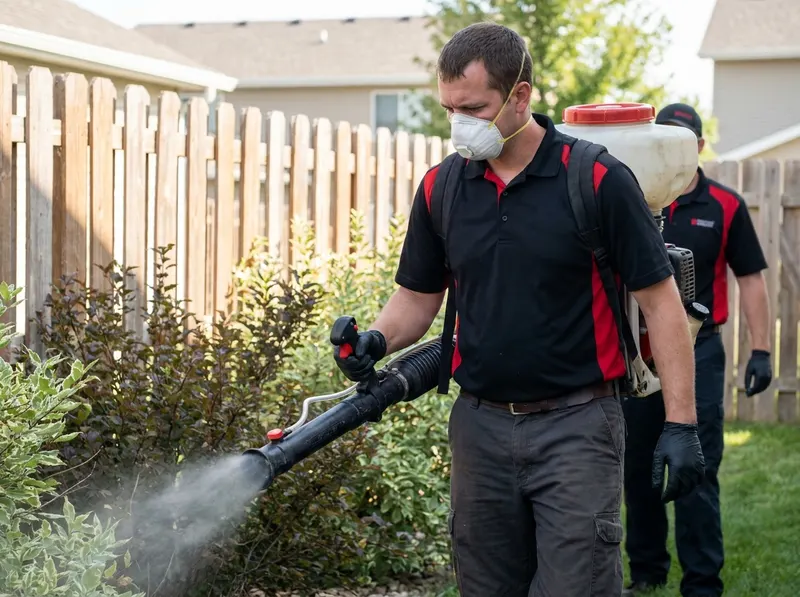
Mosquito control targets Culex and Aedes species thriving in low-lying turf, ornamental shrubbery, sheltered underbrush, and shaded riparian borders near river bottom zones. Automated ultra-low-volume cold fogging applies water-based botanical adulticides to foliage undersides where adult mosquitoes rest during daylight hours, while biological larvicides target non-draining standing surface pools, ditch lines, and landscape drainage catchments. Targeted application schedules cycle every 21 to 30 days throughout the peak summer emergence window to disrupt the reproductive mosquito life cycle and significantly depress biting insect pressure near residential patios and turf perimeters.
Get a quote →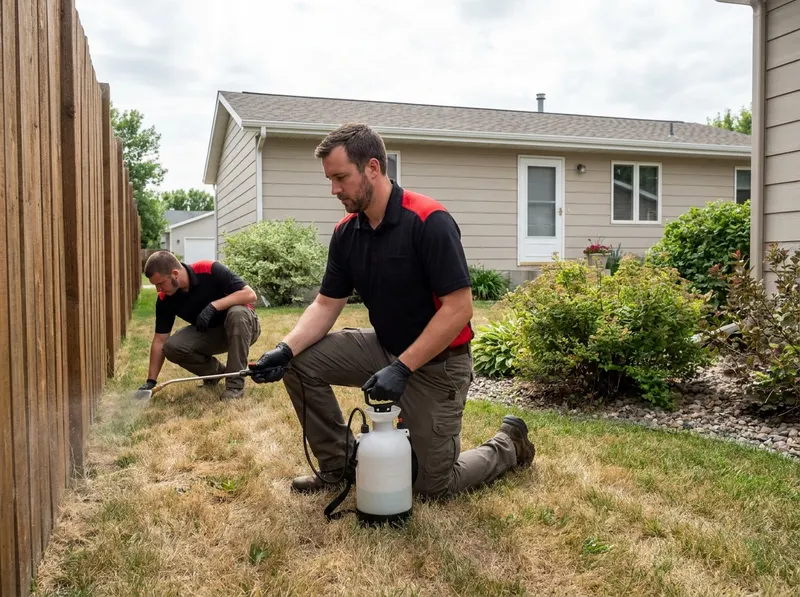
Flea and tick treatments eradicate cat fleas (Ctenocephalides felis) and American dog ticks (Dermacentor variabilis) from indoor carpets, subflooring, pet bedding, baseboard seams, and exterior transition turf. The process integrates dual-action adulticides and juvenile hormone mimics, halting egg hatch rates and breaking the reproductive cycle across floorings, pet resting zones, tall lawn perimeters, and shaded tree margins. Technicians apply structural micro-emulsion sprays indoors alongside perimeter granules on exterior lawn borders, eliminating dormant pupae reservoirs and protecting companion animals from vector-borne pathogens across suburban properties.
Get a quote →You get a firm, itemized quote for your pest control services before any work begins, no surprises, no pressure.
Careful prep, tidy work, and a full cleanup when we are done. We treat your home and belongings like our own.
The same trusted, background-checked team from the first call to the final check.
If dealing with active wall scratching, chewed utility line jackets, or droppings inside finished basements, select comprehensive mechanical rodent exclusion alongside interior vacuuming and tamper-resistant bait stations. If experiencing massive south-facing exterior aggregations of boxelder bugs or cluster flies during late-autumn cooling or early-spring warming, select high-pressure residual barrier microencapsulation applied directly to exterior siding joints, window casings, and soffits. The trade-off centers on upfront mechanical labor versus periodic exterior residual maintenance: structural exclusion requires sealing foundation gaps with steel mesh and elastomeric sealants for permanent denial, whereas exterior perimeter sprays require scheduled quarterly applications to withstand Red River Valley wind, snowmelt, and ultraviolet chemical degradation.
When bed bug activity appears across baseboards or mattress seams, choose high-temperature thermal remediation over repeated spot spray treatments; thermal convection elevates structural temperatures to lethal thresholds in a single 8-hour intervention, eliminating chemical resistance risks at the trade-off of higher initial preparation and equipment mobilization costs. For wood-destroying carpenter ants nesting inside moisture-damaged sill plates or roof eaves, prioritize non-repellent structural transfer termiticides over store-bought contact repellents. Contact sprays kill foraging workers instantly and scatter the queen deeper into wall framing, whereas non-repellent transfer chemistry allows foraging workers to track the active ingredient into the central nursery gallery, neutralizing the entire queen-bearing parent colony over 14 to 28 days.
Property owners deciding between corrective spot eradication and recurring quarterly perimeter plans must weigh ongoing biological pressure: isolated spot interventions address immediate localized symptoms, while continuous seasonal barrier perimeter schedules offset extreme Fargo weather shifts, preventing dormant structural void recolonization without requiring interior chemical re-entry.
Every project gets a firm, written price after a free on-site visit. Ranges below for orientation.
Tell us about your pest control services job and we'll send a clear, written quote, usually the same day. Or just call and talk to a real Fargo pro.
(701) 850-0426
Properties across Fargo sit atop the heavy, poorly draining clay soils of the Glacial Lake Agassiz basin, creating extreme seasonal structural movement along basement foundation slabs. When winter air temperatures plunge below zero degrees Fahrenheit, severe thermal stack effects pull house mice and brown Norway rats toward heated utility lines penetrating rim joists along neighborhoods near the Red River corridor and Rose Creek coulees. During high summer humidity, river bottom flood zones adjacent to Island Park, Lindenwood Park, and the North Dakota State University perimeter generate massive populations of mosquitoes, boxelder bugs, and moisture-seeking pavement ants that exploit these seasonal freeze-thaw foundation fractures. Furthermore, older masonry structures and historic residential framing across Downtown Fargo, Hawthorne, and the Roosevelt neighborhood exhibit settled limestone foundations, non-mortared rubblestone walls, and degraded crawl space access hatches that provide immediate subterranean access routes for overwintering pests. In newer suburban developments throughout Osgood, Bluemont Lakes, and Woodhaven, backfilled clay soil settles against poured concrete foundation walls, producing structural shearing along exterior utility line penetrations, daylight basement sump discharge tubes, and air conditioning line sleeves. High water tables near the Red River create severe sub-slab moisture accumulation, attracting subterranean moisture pests, wood-boring carpenter ants, and fungus gnats through microscopic foundation fissures. The combination of sustained sub-zero winter temperatures, rapid spring snowpack melting, and high summer humidity creates a volatile biological pressure gradient across Cass County, demanding precise structural exclusion techniques and customized chemical delivery schedules adapted to Fargo soil mechanics and regional architecture.
Free estimates for Fargo & the surrounding area.
 Trivano Bug Response